
What you won’t find in mains water – but may find in your well
BACTERIA
Bacteria are a fairly common problem in well water, mainly coliform bacteria, enterococci and E. coli. They reach the well with groundwater – through runoff from fields fertilised with manure or slurry or, more often, through seepage from old cesspits, which are still common in rural areas. Bacteria are very often accompanied by nitrates, nitrites or ammonium ions, which point to the same source of pollution: a cesspit.
Drinking such water can cause at least digestive and intestinal problems. Healthy adults usually cope in the short term, but people with weakened immunity, children and the elderly may develop more serious complications. That is why European drinking water rules do not tolerate these bacteria and set zero limits for them. In waterworks, bacteria are killed mainly with chlorine, chloramine or ozone.
There are several ways to deal with bacteria. UV lamps and silver-based products are quite common. In the H2O nanotec e-shop you will find a more modern way of removing bacteria – ultrafiltration. UV light or silver usually kills the bacteria, but the dead bacteria and their metabolites remain in the water you drink.
Ultrafiltration reliably filters bacteria out, so the water is truly clean. Reverse osmosis removes them just as well.


IRON AND MANGANESE
These two elements usually occur together. Small amounts are harmless, but higher concentrations give water a metallic, iron taste. The water becomes unpleasant, leaves rust stains and turns white laundry yellowish (iron) or greyish (manganese). Iron and manganese are usually leached from the bedrock; industrial pollution is only rarely the cause.
There are several ways to remove iron and manganese. Special iron and manganese filters oxidise these divalent metals, but we prefer ion exchangers, which reliably remove both elements. Since iron and manganese need to be removed not only from drinking water but also for laundry, we are convinced that only a whole-house solution is truly effective.
H2O nanotec offers whole-house filters. For drinking water, these elements are also removed by reverse osmosis.
NITRATES AND NITRITES
Nitrate and nitrite pollution often goes hand in hand with elevated levels of ammonium ions and bacteria. Nitrates and nitrites are formed by the oxidation of urea and ammonium ions that enter water from fields and cesspits. Some nitrates, such as sodium nitrate and especially ammonium nitrate, are also used as nitrogen-rich fertilisers. Nitrites in particular are suspected of having a carcinogenic effect.
In the body, nitrites and nitrates can easily convert into one another, so the same warning applies to nitrates. Nitrite has been shown to bind to haemoglobin. This is a particular risk for infants – it can cause breathing difficulties and blue lips, and at extreme concentrations even suffocation. On request, we can adapt the media in our IMT-S2 and IMT-S4 softeners so that they remove nitrates and nitrites at the same time as softening the water, in a single process and with the same regeneration.
The most suitable method of nitrate removal is an ion exchanger; reverse osmosis removes nitrates too.

HARD WATER
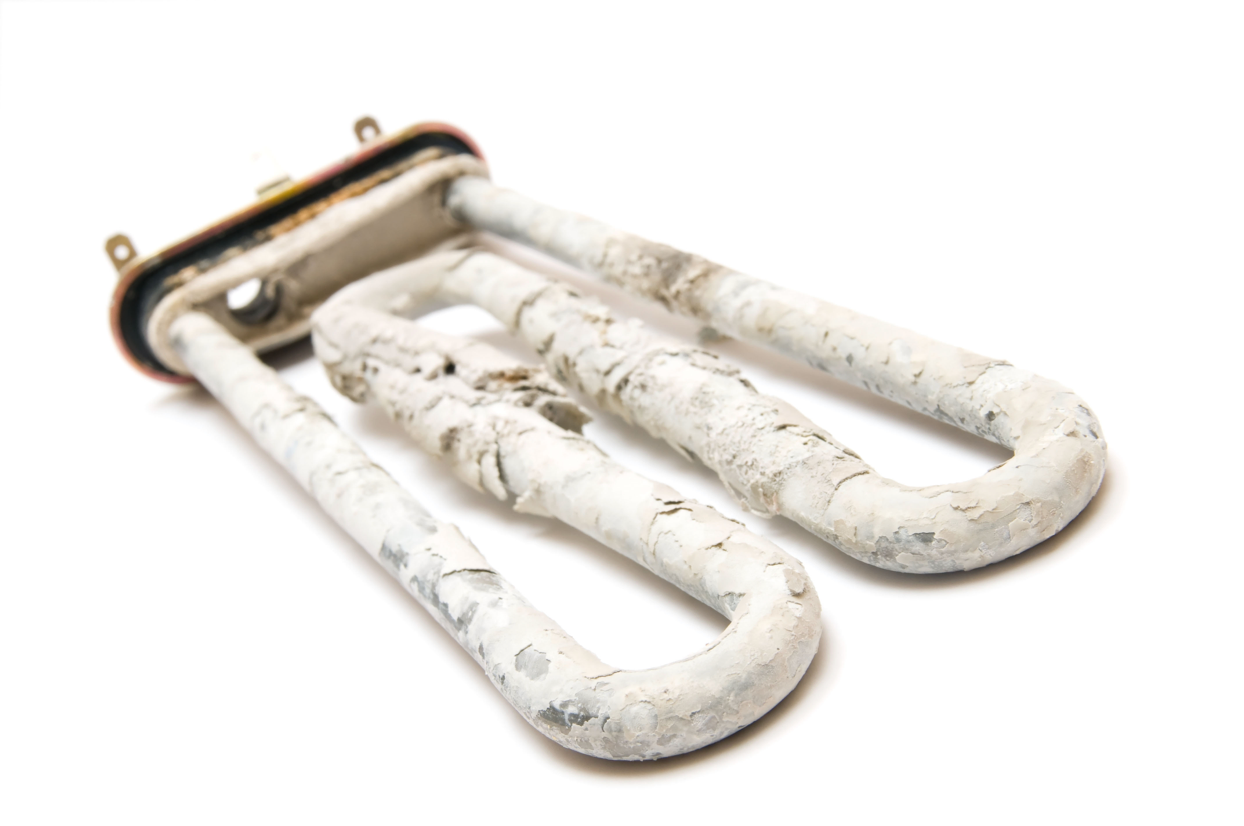
When water flows through limestone bedrock, the carbon dioxide dissolved in it converts insoluble calcium carbonate (limestone) into calcium bicarbonate, which dissolves in water. The water becomes highly mineralised – hard. When it is heated, calcium bicarbonate breaks down again into carbon dioxide and calcium carbonate, which settles as limescale wherever water is heated: in boilers, washing machines, pots and on heating coils. Over time it can coat a heating element so thickly that it destroys the appliance.
There are various methods of water softening, for example magnetic treatment, which is claimed to induce aragonite instead of calcite crystallisation. After passing the magnet, calcium carbonate forms as a powder that no longer settles on heating elements.
A more elegant way is softening with an ion exchanger. It removes most of the calcium and magnesium ions from the water, and the degree of softening can be adjusted. H2O nanotec offers water softeners for the whole house that solve hard water problems for good. Alternatively, you can use reverse osmosis, but it produces only smaller amounts of water for drinking and cooking.

