
The presence of coliform bacteria and Escherichia coli in well water is a common problem for owners of private water sources. The occurrence of Escherichia coli (E. coli) and coliform bacteria in a well usually indicates faecal contamination, most often due to seepage from septic tanks or run-off from land fertilised with organic manure, and requires an effective, long-term solution. This article systematically compares the three main approaches to eliminating them – chemical disinfection (chlorination), physical inactivation using UV radiation and advanced membrane processes (ultrafiltration, nanofiltration), which are used in practice as well water filters. In terms of effectiveness, operating costs and output water quality, the most effective method for removing coliform bacteria and E. coli from well water appears to be ultrafiltration, which, unlike the other methods, physically removes microorganisms from the water rather than merely inactivating them.
Escherichia coli in a well as an indicator of faecal contamination
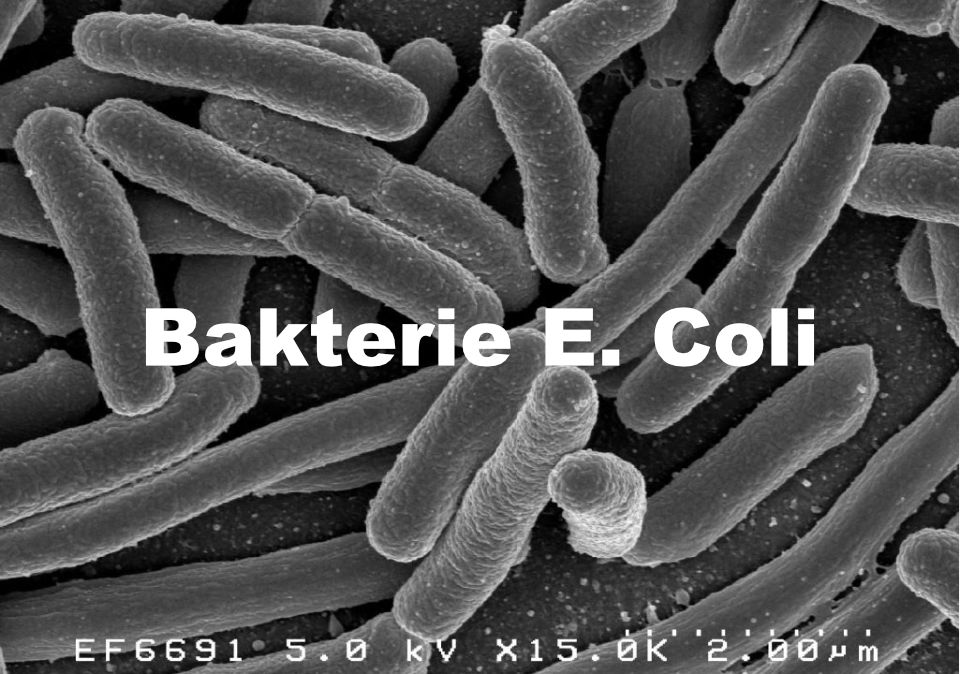
How to remove coliform bacteria from a well: an overview of methods
There are several ways to eliminate coliform bacteria in a well. Apart from the well-known but impractical method of boiling water, the oldest and best-known method is chlorination. UV lamps are also used very often. The newest are membrane filtration methods, such as ultrafiltration or nanofiltration. This article covers all of these methods. We leave out others, such as water ozonation (which only makes sense for drinking water in treatment plants) or the use of silver and copper (too slow for flow-through filtration).
Water chlorination (chemical disinfection)
Chlorination is the most common way of getting rid of bacteria. It is used mainly in water treatment plants. A great advantage of chlorination is that chlorine remains in the water for some time, so the water stays sterile on its way from the treatment plant to the consumer.
Chlorine works through its oxidising properties. Chlorine gas reacts with water to form hypochlorous acid. This penetrates cell membranes and oxidises the lipids in them. Inside the cell it attacks the enzymatic apparatus and effectively suffocates the bacterium. It also attacks unsaturated fatty acids in the bacterial cell wall, which perforates the membrane so that the cell effectively “leaks out” (1).
The disadvantage is that dead bacteria, their organelles and metabolic residues remain in the water, although they are inactive and therefore harmless.
UV radiation (physical inactivation of microorganisms)
The second way to remove coliform bacteria from a well is UV radiation at wavelengths of 250 to 270 nm, which is particularly effective against bacteria. The photons cause some of the nucleotides that make up bacterial DNA, especially thymine, to form dimers (2). This prevents DNA replication and stops the bacteria from multiplying.
In this case too, as with chlorination, coliform bacteria or their components remain in the drinking water, although they are inactive.
One of the major drawbacks of sterilising water with UV radiation is that the mercury UV lamp ages very quickly. After about 9,000 hours, i.e. roughly one year of use, the lamp's electrodes degrade and the quartz glass of the lamp becomes “blind”. After a year of use, the effectiveness of a UV lamp drops to 60–80% of its original value, so it can no longer be guaranteed that the UV radiation will reliably kill bacteria. The lamp has to be replaced every year, which is also relatively expensive.
Membrane filtration (ultrafiltration, nanofiltration)
The newest and probably also the best method for eliminating coliform bacteria in a well is membrane filtration. A membrane can be imagined as a sieve with extremely small pores through which neither bacteria nor viruses can pass. The bacteria stay on the membrane (sieve) while the water flows freely. After some time, the bacteria are removed when the membrane is flushed. A big advantage is that you do not drink dead bacteria or their components.
The best-known membrane method is ultrafiltration. It uses a membrane with a pore size of 0.01 micrometres. Compared with the size of bacteria, which is 0.5 to 5 micrometres, it is like trying to push a football through the mesh of a fence.
Nanofiltration is a similar method, but the membrane pores are one to two orders of magnitude smaller still. In addition to bacteria and viruses, it can also remove large inorganic ions and some organic molecules.
A major advantage of ultrafiltration over nanofiltration is that normal mains pressure is sufficient for filtration and no pump is needed. Its flow rates also allow ultrafiltration to be installed where the water enters the house, and so remove coliform bacteria and E. coli from all the water in the entire house.
Nanofiltration, on the other hand, requires higher pressure and has a much lower flow rate. It is therefore better suited to a single tap, usually at the kitchen sink.
| Method | Bacteria removal | Residues in water | Operating costs |
|---|---|---|---|
| Chlorination | inactivation | yes | low |
| UV lamp | inactivation | yes | medium |
| Ultrafiltration | physical removal | no | low |
FAQ – coliform bacteria and E. coli in a well
How do coliform bacteria get into a well?
Coliform bacteria most often get into a well through seepage from septic tanks and cesspits or through run-off from land fertilised with slurry or manure, especially after rain.
What are coliform bacteria in a well?
Coliform bacteria are a group of microorganisms commonly found in the intestines of warm-blooded animals. Their presence in water is an indicator of faecal contamination and signals a possible health risk, especially for drinking water from wells.
What does E. coli in a well mean?
Escherichia coli in a well clearly indicates recent faecal contamination. The most common sources are leaking septic tanks, cesspits or run-off from fields fertilised with organic manure. Such water is not safe to drink without treatment.
What do coliform bacteria cause?
If these bacteria get outside the intestines into other parts of the body, they can cause health problems. In a healthy person, the most common result is diarrhoea. In children, the elderly or people with weakened immunity the illness can be more severe – including heavy watery diarrhoea, abdominal pain, cramps, nausea, vomiting and fever. Some strains of E. coli can also cause bloody diarrhoea.
How do I remove coliform bacteria from a well?
Coliform bacteria can be removed from a well by three methods: chlorination (chemical disinfection), UV radiation (DNA inactivation) and membrane filtration. The most effective is ultrafiltration, which physically removes bacteria from the water rather than just deactivating them.
Is a UV lamp enough for bacteria in a well?
A UV lamp can effectively inactivate bacteria but does not remove them from the water. Its effectiveness also declines as the lamp ages and depends on water quality. That is why it is often combined with filtration.
What is the best filter for coliform bacteria?
Ultrafiltration is considered the most effective filter for coliform bacteria. It captures bacteria and viruses on the membrane and ensures that not even their residues remain in the water.
The best solution: a membrane filter for coliform bacteria using ultrafiltration
Because we are convinced that ultrafiltration is the best way to disinfect water and at the same time the cheapest and maintenance-free, for removing bacteria our h2onanotec.cz online shop offers only ultrafiltration units and we consider other methods unnecessary.
For removing coliform bacteria and Escherichia coli from a well for an entire house or flat:
(Installed where the water supply enters the house)
Ultrafiltration for the kitchen:
Show me the ultrafiltration range
Written by:
RNDr. Jiří Polman CSc., Managing Director
References:
- LeChevallier et al. Applied and Environ. Microbiology 1988(54) 2623-2630
- Alberts et al. Molecular Biology of the Cell

